Best Fencing Designs for Personal Privacy
Privacy fencings are one of those yard projects that start as a simple wish and swiftly become a full-on design discussion. The min you actually stand in your lawn and discover what the next-door neighbors can see, you recognize "privacy" is not one point. It is sightlines, sound lug, wind-driven sound from open entrances, glow from a next-door neighbor's porch light, and also exactly how your fencing looks when the sunlight hits it at 6:00 p.m.
When individuals ask me what the most effective fence style is for personal privacy, I generally ask a second concern first: personal privacy from what, and where? Are you attempting to block straight sights from a two-story residence, soften noise from a roadway, or keep children and pets from wandering right into the next-door neighbor's lawn? The right design depends on the instructions of sight, the elevation you're allowed to build, and whether you want a fencing that really feels solid and building or one that's private yet still light enough to breathe.
I have actually aided house owners spec fences through various seasons and various whole lot formats, and the pattern is consistent. The strongest personal privacy normally comes from fences that have very little gaps and frequent vertical insurance coverage. However the most effective option is not constantly the thickest-looking choice. Sometimes you require a design that manages sightlines while still letting air flow decrease wind stress and anxiety. And occasionally the "prettier" fencing success since you really intend to deal with it every day.
What "personal privacy" truly needs from your fence
If you desire the useful variation, personal privacy depends on 3 things: how much of the space between pickets or panels is open, how tall the fencing is relative to eye degree, and whether the fence is lined up with the way individuals look into your yard.
A classic mistake is choosing a style that's marketed as "personal privacy" however is actually "semi-private." Shadowbox fencings can be lovely, and they can decrease sightlines a whole lot, however if you have an upstairs window intended towards your lawn, even little voids become a network for view. Similarly, latticework can look significant personally, yet it still allows light and motion come through.
There is also the sound side. A solid, dense surface area aids break up sound waves greater than a style with wide spacing. However the sort of sound issues as well. If your problem is smothering voices from a neighboring deck, a thicker, continuous face assists. If your issue is wind noise, a fence with good airflow can lower stress and resonance. That is why I'm cautious about advising the most closed fencing option for each backyard without taking a look at wind exposure.
Finally, there are the real-world constraints: property lines, easements, gate placement, and local height regulations. In several places, fencing height limitations vary depending on where you're developing, and they can also alter near edges. Prior to you love a style, it's worth inspecting those policies so the task does not obtain revamped after the fence company determines everything.
Board-on-board: the personal privacy workhorse
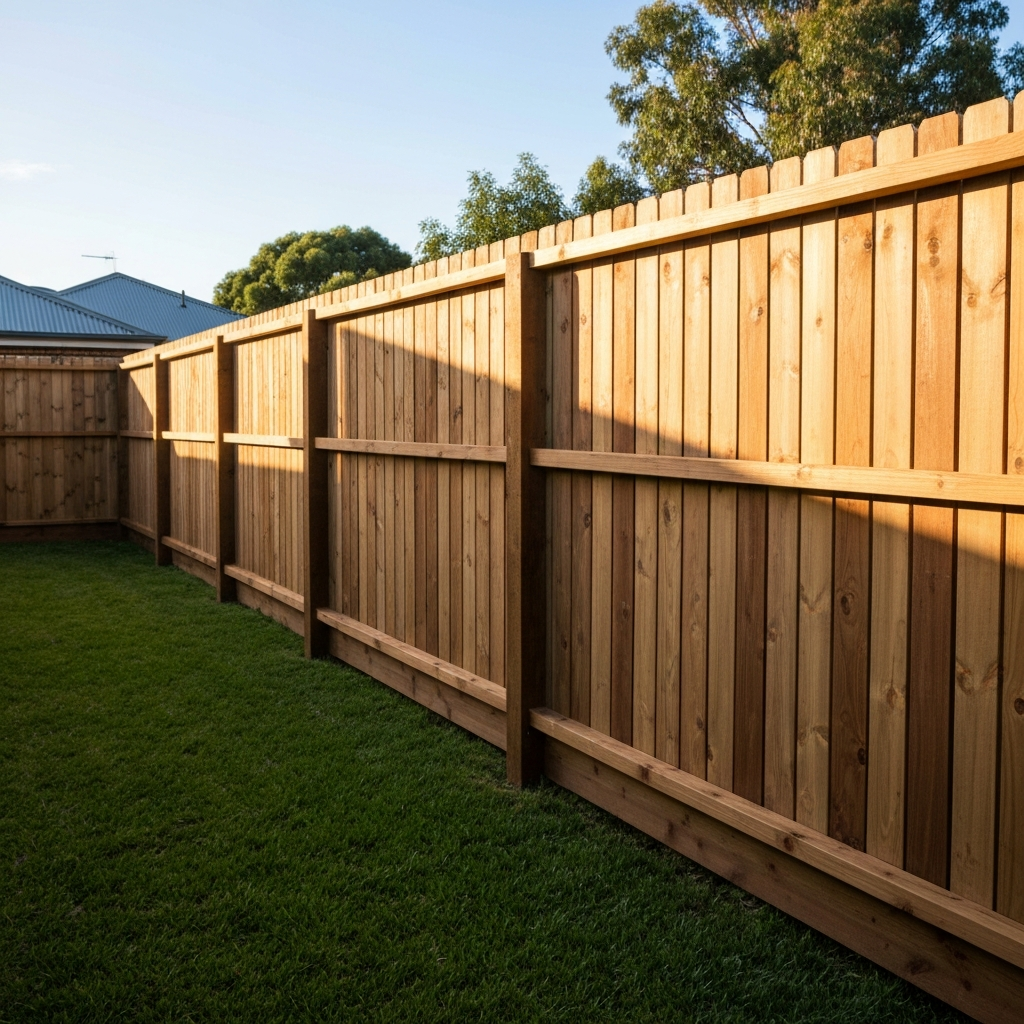
Board-on-board is the style many people mean when they claim "I desire privacy." It's generally two layers of upright boards, surprised so there's no straight line of sight via the fencing. Done appropriately, it obstructs views from the street side and from surrounding patios without making your lawn seem like a bunker.
This style is prominent for a factor. It offers strong privacy with a timeless appearance that fits everything from older homes to more recent builds. It also takes care of usual site obstacles. If you have slightly uneven quality or you're building near an incline, board-on-board can be adapted with cautious format and excellent board fastening so the face remains consistent.
The trade-off is upkeep and weight. Wood board-on-board fencings tend to require even more upkeep than vinyl or metal. If you go with wood, you'll wish to intend on staining or sealing and keeping an eye on straight surface areas that gather moisture. In my experience, the fencings that last are the ones set up with attention to spacing at the bottom and good cap options at the top.
A detail that matters more than individuals expect is the density and spacing of the boards. Broader boards with tighter astonishing lower sightlines. Yet if boards are as well securely loaded and your style traps wetness, you can develop troubles with time. That balance is where the "it depends" comes to be real.
Solid panel fencing: maximum block, clean lines
If you desire personal privacy that feels instant, strong panel fence is hard to beat. Relying on the material, it can be timber panels, composite panels, or vinyl systems made with overlapping layers or interlocking tongues. The common thread is insurance coverage, fewer spaces, and a smoother face.
This is the group I steer people towards when they tell me they desire privacy from several angles. For instance, one property owner I worked with had a side lawn with a next-door neighbor's sidewalk running together with it. They didn't simply need to block a solitary line of vision, they needed to quit the "look view" that occurs when people are strolling by at different heights. Solid panels reduced that impact quickly, and the property owner later on informed me they felt like they regained control of that entire side space.
Solid panel fencings additionally often tend to streamline aesthetic clutter. With less private pickets, the lawn reviews cleaner. That can be particularly handy if you have landscaping you want to keep as the hero. Instead of the fence demanding focus, it becomes a backdrop.
The sensible care is wind and hardware. Solid surface areas capture wind. That is excellent for privacy, but it indicates the framework requires strong articles and great bracing so the fence does not establish drooping or loosened panels. A fence company that installs the "minimum that ought to function" is not the one you want below. You desire a person that determines for your wind conditions and supports with confidence.
Shadowbox privacy: the most effective concession for numerous yards
Shadowbox fencings being in a fascinating middle ground. They still surprise boards so you get privacy, yet the openings are usually established to develop a darkness effect from specific angles. From one instructions, the fencing looks strong. From an additional, you can sometimes see movement or a tip of the backyard behind it, relying on light and the board spacing.
I like shadowbox for home owners that desire privacy without the hefty, closed-in look. It works well when you're securing exterior seating locations yet don't require full, courtroom-level screening. It also beams when the fencing line runs along areas where you want air movement, like near tall planting beds or where you need to maintain the lawn from really feeling oppressive.
The vital variable is how the boards are staggered. 2 shadowbox fences can look comparable from across the backyard yet perform extremely differently close. If you're handling an upstairs window, you'll desire a tighter astonishing and a face layout that reduces straight view. If you're primarily obstructing a ground-level patio, shadowbox can be enough and feel even more open.
If you're an "I desire privacy plus charm" person, shadowbox is commonly the wonderful spot. It has enough rhythm to look willful, and it's much easier on the budget plan than one of the most thick layouts when materials and labor are taken into consideration together.
Vertical board fencings with limited spacing: straightforward, solid, and adjustable
Vertical board privacy is what many individuals image first. The genuine question is spacing. If you place boards close sufficient together, you obtain outstanding privacy without counting on facility layering. Tight spacing likewise makes it simple to customize the look: various board sizes, a regular leading line, and optional caps or cut that make it feel finished.
This design can operate in almost any kind of backyard due to the fact that it is adaptable. If you desire the fencing to match a home outside, you can straighten the board sizes and select a discolor shade that echoes cut. If you desire a slightly modern-day look, narrow boards with crisp lines and clean blog post spacing can give a customized feel.
But tight-spacing timber is likewise where craftsmanship shows. If boards are mounted with inconsistent gaps, the fence won't just look uneven, it will certainly come to be irregular secretive. And if your boards diminish or twist with time, you can open up tiny gaps. That is why the most effective outcomes originate from choosing boards suited for your environment and from installment that keeps boards directly and appropriately fastened.
If you're tempted by this option, think about asking your installer regarding exactly how they manage seasonal motion. Some contractors make use of even more robust fastening patterns or choose details timber qualities to lower warping. It's not regarding excellence, it has to do with anticipating exactly how products behave.
Vinyl and compound: low-fuss personal privacy that still looks intentional
Vinyl and composite personal privacy fences can provide constant insurance coverage and a clean, repeatable appearance. The large marketing factor is minimized maintenance. You're not tarnishing every year or fretting about whether a wet stretch will certainly begin damaging down the surface. For many home owners, that alone deserves paying extra upfront.
These materials likewise take care of the "I desire it to look the very same forever" state of mind. Plastic in particular can maintain color well compared with several repainted or discolored wood fences, though you should still anticipate some fading in intense sunlight over long periods. The realistic objective is to keep the fence looking nice with marginal effort, not to assume it will certainly look brand-new after years outdoors.
The compromise is influence resistance and warm. In position with huge temperature swings or extreme sun, plastic can broaden and contract. Good installations represent that with proper blog post spacing and fastening so you do not get warping or gaps. If the installer is sloppy, also a great fencing product can wind up looking worn out also soon.
Composite systems are normally much heavier and can feel tougher, which can aid for wind exposure. Still, every system has its traits, and it's wise to evaluate the specific product rather than thinking all vinyl or composite fencings act identically.
In terms of personal privacy performance, solid panel vinyl or snugly interlocking systems tend to be solid. If you're selecting an alternative style like picket plastic, pay attention to the spacing and the way the boards overlap.
Metal personal privacy fencings: surprisingly effective, not always the "quiet blocker"
Metal fences can be a solid option when your concern is long life and low upkeep. They also look terrific when you desire privacy without a fully nontransparent wall. Nevertheless, classic steel layouts typically leave a lot more gaps than wood or panel styles, so "personal privacy" in the rigorous feeling can be tougher to achieve unless you pick a completely covered system or usage metal with strong infill.
That claimed, metal can still assist. If you pick a steel privacy fence with infill that blocks direct sight, it can be exceptionally long lasting in harsh climate. It's likewise less susceptible to rot and pests, which matters if your yard is damp or shaded.
The compromise is aesthetics and acoustics. Metal has a tendency to transmit or show audio in different ways than thick wood or plastic. If your primary objective consists of noise decrease, you must assess whether steel is the best tool, or whether coupling it with landscape design and various other sound dampening choices will certainly obtain you closer to what you want.
I'm not stating "do not do steel." I'm stating suit expectations. Steel is a longevity have fun with privacy that depends heavily on the infill design.
Where lattice fits: personal privacy with air flow and a plan
Lattice is the fence design individuals question the most, since it can look exclusive up until you're standing near it and see how much light and movement goes through. Lattice works best as a supplement, not as your single privacy solution.
In technique, latticework can make sense when you desire partial personal privacy currently and greater privacy later. As an example, you can combine lattice with climbing up plants along a fence line. In the early months, personal privacy will certainly be moderate. With time, as plants fill in, the fence becomes a lot more reliable. That approach is wonderful if you enjoy horticulture and you agree to wait via the "slim stage."
Lattice likewise works when you're intending to obstruct a details sight, like a next-door neighbor's tilted sightline from one place. Utilize it where you need it, and count on solid panels elsewhere.
If you're thinking latticework since it's less costly, think about the longer timeline. It's not automatically a lower price. You may spend on plants, upkeep, and the moment it takes for them to mature.
Choosing elevation and format: the part nobody advertises
A fencing style can be perfect and still fail if the layout is incorrect. Privacy has to do with sightlines. Eye level from a neighbor's seating area can be lower than you assume, or higher than you expect if they have exterior furniture or an upstairs window.
A few layout truths often tend to make a distinction:
First, entrance placement issues. A fencing line that is strong besides an entrance opening can undermine your privacy if the gate lines up with where next-door neighbors usually stand. I have actually seen people choose a great style and then be sorry for the fact that the only sight into their yard is with the gate.
Second, edges and angles issue. Also a completely nontransparent fence can reveal views via gaps at the corner if the blog posts and panels are not straightened very carefully. That's where regular craftsmanship makes a noticeable difference.
Third, landscaping can assist yet it requires to match the fence style. If you have an even more open style, plants can load voids. If you have a thick style, you can concentrate on appearances and noise buffering without counting on plants for privacy.
Finally, think about just how wind impacts debris and visibility. A fencing that blocks view but allows wind-driven dust impact via can still feel "revealed" also if it's practically personal. Often a slightly denser face and tighter board spacing helps greater than adding more plants.
A peek at one of the most usual privacy styles
When homeowners request a fast shortlist, I generally provide a clear set of choices, yet I additionally stress that "finest" depends on their sightlines and upkeep resistance. Below's the sensible shortlist I reach for most often:
- Board-on-board: dense shocking for solid sight barring, timeless look, timber maintenance needed if you select wood
- Solid panels (timber, composite, vinyl systems): optimum protection, tidy look, needs solid messages and bracing for wind
- Shadowbox: solid personal privacy with a lighter visual feeling, finest when you want concession not complete opacity
- Tight-spaced upright boards: adjustable and simple, personal privacy depends greatly on workmanship and material stability
- Lattice plus plants: partial privacy that enhances gradually, best as a supplement instead of the major blocker
If you're uncertain which one fits, the fastest course is typically to walk your building line with someone who knows just how privacy fencings are evaluated, and after that choose what you're really trying to block.
Questions to ask your fence company prior to you sign anything
This is where people shield themselves. A fence company can sell you on a style, yet the inquiries listed below assistance you discover whether they'll construct it in such a way that performs.
- What privacy criterion do you develop to: full view obstructing from typical eye degree, or "semi-private" deliberately?
- How do you manage message spacing and supporting for wind tons on solid or dense panels?
- What materials and qualities do you recommend for your neighborhood environment, and how will they mature in sunlight and rain?
- What is your prepare for entrance positioning, because that's commonly the weak point secretive?
- Can you show instances of the same design mounted on a comparable great deal design, not simply in a display room?
You can tell a lot from just how they answer. A positive installer will talk about alignment, measurement, and how they stop spaces and drooping. A vague response usually means they're marketing the look, not the performance.
Trade-offs you'll really feel in daily life
Privacy fences are not simply a fixed object. You interact with them each day, and the trade-offs show up fast.
If you select an extremely thick fence, you might discover that the lawn feels cooler in some periods yet even more confined in others. Some house owners like that, others seem like the yard sheds its visibility. If you have a sight you appreciate, a completely nontransparent fencing can steal it also if it gives you personal privacy from neighbors.
Dense fences can likewise produce even more wind pressure. That's not simply a design issue, it can influence how your fence examines time if the structure is hardly adequate. Sagging panels are greater than an aesthetic issue. Drooping adjustments sightlines and can create new gaps.
On the various other hand, more open designs like shadowbox or particular fence-and-plant combinations can let in breeze, that makes your yard really feel extra comfortable. However you may obtain "motion exposure" in the evening. A next-door neighbor with cozy lights can sometimes develop silhouettes, also behind a fence that obstructs direct angles. If nighttime privacy issues to you, you'll want to consider density and the method light reflects off materials.
Maintenance is the last compromise. Timber fencings can be spectacular and natural, but they call for a strategy. Vinyl and composite typically need less, yet you need an excellent setup and you should still expect some routine cleaning.
Matching the style to your yard type
Not every yard ought to obtain the exact same solution.
If your fencing line is along a straight limit with consistent neighbor sightlines, thick designs like board-on-board or solid panels often do finest. They close the problem in a foreseeable way.
If your lawn has multiple checking out factors, like a deck, a sidewalk, and a home window, a strong panel technique can simplify everything. Less uncertainty, less weak spots.
If your backyard is landscaped heavily and you want the fence to discolor back aesthetically, shadowbox or tight-spaced upright boards can work beautifully. They supply personal privacy while maintaining the space sensation developed as opposed to walled off.
If you get on a budget plan however you still want ultimate privacy, lattice with a plant strategy can be a clever compromise. You're purchasing time and labor rather than purchasing solid protection quickly. Simply be straightforward with yourself about the initiative needed to keep plants thriving.
If you're taking care of severe weather condition, longevity needs to be part of the style decision, not an afterthought. That pushes options towards materials and installment techniques that can handle your conditions without constant repairs.
A couple of field-tested "small information" that alter outcomes
The large choice is the fencing style, yes. However the end result commonly switches on details.
One detail I like is a good cap. Caps secure horizontal board ends and lower water direct exposure. Despite having top quality setup, water discovers sides, and caps are where you obtain years.
Another is lower clearance. Too reduced and you catch wetness. Too high and you lose personal privacy and let pets under. The correct amount differs with environment and grade, yet the concept holds: do not treat it like an afterthought.
Then there's placement and spacing uniformity. It's not practically looks. Constant spacing produces constant privacy. If one section is somewhat broader, you might not see it during daytime, but in the evening with various lighting, that Have a peek at this website void can become the entire factor you're trying to avoid.
Finally, think of future changes. If you plan to include outside lights, a grill island, or a seating wall surface, the fencing line will become a backdrop. A personal privacy fence that looks excellent now need to still look great after you deal with your backyard for a year or two.
Picking the "best" style for your very own version of privacy
The best fencing design for privacy is the one that blocks the specific views you're dealing with, stands up in your climate, and matches just how you want your yard to feel. If you desire near-solid insurance coverage and you can cope with the density, board-on-board and solid panels are the greatest entertainers. If you desire solid personal privacy without making the lawn feel closed, shadowbox and tight-spaced vertical boards are often the most effective blend.
If you're torn, right here's an approach that operates in real life. Make a decision which side of the lawn matters most, then focus on the densest style there. Use slightly more open choices elsewhere if you want air movement and gentleness. That "targeted privacy" strategy is normally less expensive than making the entire building line similarly dense, and it still supplies the sensation you actually want when you step outside.
If you take your time, ask the appropriate concerns, and pick a fence company that prepares for structure and placement, you can end up with a fence that does more than block sightlines. It comes to be the limit that lets you use your exterior room like it's yours.